
hello, friends 💖
I’m departing somewhat from the usual format today because this topic doesn’t really fit within my standard weekly planning framework. I think it’s worth it, though, because I’m talking about a universal, constant problem: mistakes. Screw-ups. Goofs. Bad decisions. Moments of weakness or cowardice.
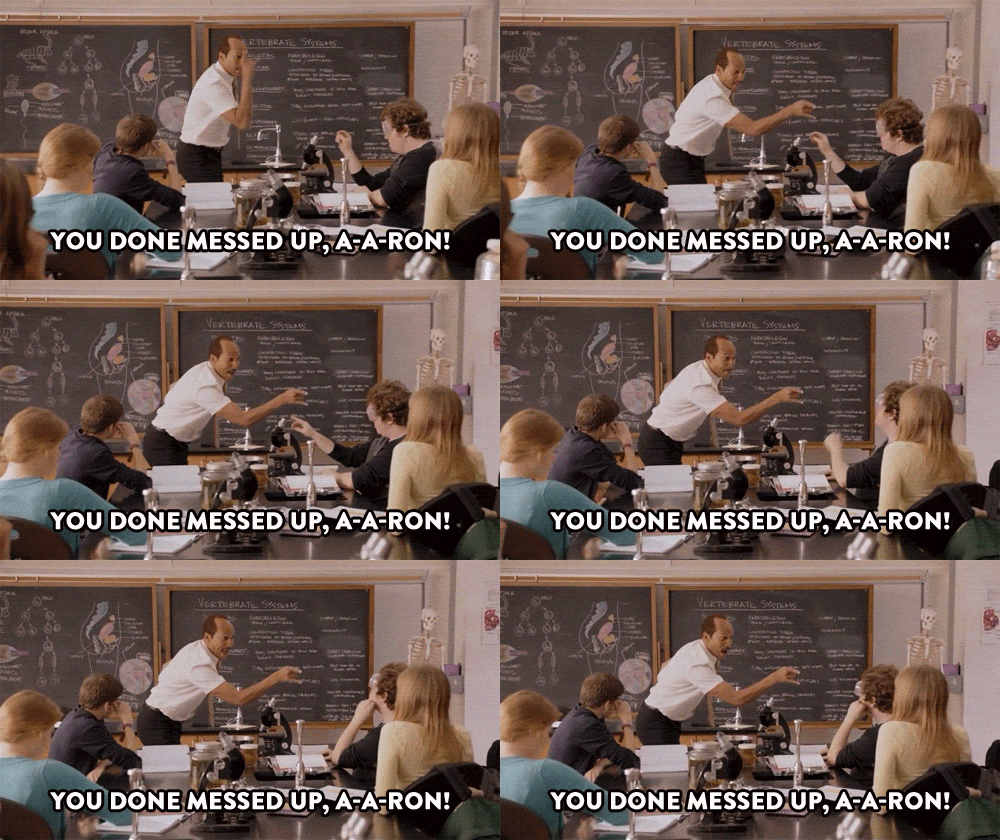
Key & Peele’s Substitute Teacher
My biggest recent “oh s***” moment involved a state tax payment. I got a statement saying I owed because I’d underpaid. I saw that the due date was a month away, jotted it down on my planner, and promptly forgot all about it.
And then time passed in a blur, as it seems to do these days. The due date came and went, but because I had only written this obligation in one place, I didn’t even notice until a few days later, when I flipped a page in my planner and realized my mistake.
I immediately started to freak out. How much would the penalty be?? Why hadn’t I just paid the bill when I got it? How had I managed to screw up something so simple?
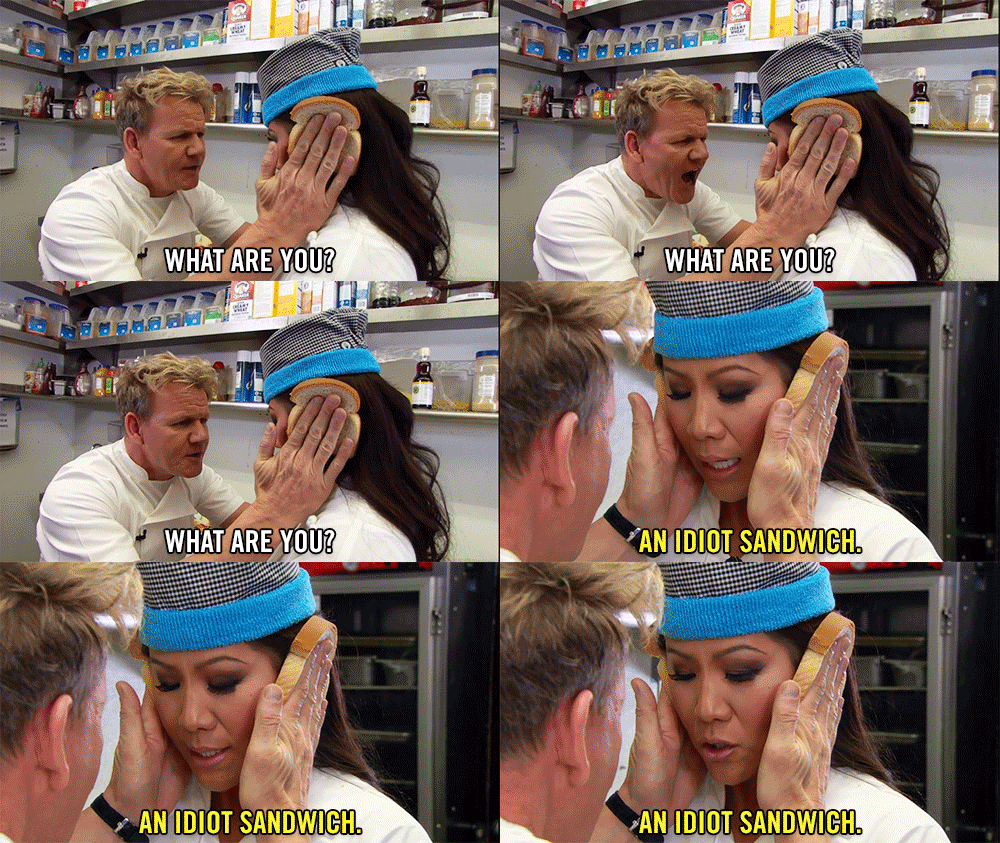
I think Gordon Ramsay is actually a pretty nice guy who just plays an asshole on TV, but maybe I’m wrong.
But friends, let me tell you: I have been doing a lot of work on my self-talk, and that training kicked in.
None of us would speak to a friend the way we’ve been taught to speak to ourselves.
If you were sitting with a friend when they discovered a mistake—even a big, costly mistake, or a mistake they could have easily avoided—would you berate them for being stupid or careless? Would you catastrophize about how much trouble they were going to be in, or how much this mistake was going to cost them? Would you point out allllll the times they’d made similar mistakes before?
No. You would not.
You would take a deep breath and tell your friend that they were going to be okay. You would point out that everyone makes mistakes, that no one is perfect, that s*** happens. You would remind them that a mistake does not define them.
And then, together, you would start to figure out what to do next.
So, that’s what I did. I screwed up my courage, logged onto the payment website, and saw that I had accrued … a whopping $16 in interest for being late.
SIXTEEN DOLLARS, friends. I almost ruined my day for the cost of a sandwich and a cup of coffee.
That was when I realized that the trash-talking we give ourselves after a mistake is optional. We do not have to do that. It does not actually accomplish anything. We can skip that step altogether, and just get down to fixing our mistake.
So, instead of five questions for the week, let’s look at a five-step framework for dealing with a mistake.
Regulate your emotions. Breathe. Take a moment to feel whatever feeling is coming up—shame, anger, disappointment—but don’t let it sweep you off your feet. Keep breathing, and keep checking your self-talk. What would you say to a friend? That’s your script for what you say to yourself.
Acknowledge the mistake. To err is human, y’all. Spare me that weakass “mistakes were made” line; if you’re going to fix a mistake, you have to admit the mistake. So, own it. You messed up. Welcome to the club. Forgive yourself for screwing up and move on to the next step.
Assess the damage. How bad is it, really? My panic response swings one of two ways: I either run away and avoid whatever I’ve screwed up, or I immediately start flailing about to fix it. The first deprives me of information I need to correct the situation; the second often makes things worse rather than better. The wiser approach is to pump the brakes and figure out what’s actually happening. What’s the damage? What’s the remedy? What should you do first? Evaluate your options before you spring into frantic action.
Fix it. Do what you can to make the situation right. Pay the penalty. Eat the s*** sandwich. Apologize to whoever you hurt or wronged. Yes, this will be painful. Be brave, and just do it. If you don’t know how to be accountable or apologize sincerely, go watch (or re-watch) season 1 of Ted Lasso. It’s a masterclass.
Learn from the mistake. When you’ve cleaned up your mess as well as you can, sit down and think about what went wrong. How could you have avoided this situation? Figure that out, and try to do better next time. I think this is why we beat ourselves up—we think we have to so we’ll absorb the lesson and not make this specific mistake again. But we can’t learn when we’re getting pummeled, whether that abuse is coming from someone else or from ourselves. Besides, owning up and fixing your mistake is probably going to be painful enough that you’ll remember it, and you’ll be motivated to learn from it.
Be kind to yourselves, friends 💖
Enjoying this newsletter? I’d be so grateful if you could forward it to a friend who might also appreciate it! If you’ve received this as a forward, you can subscribe here.
